Requirements For Production
For this project we had to create a short 90 second film for the depict competition. The website states we had to make sure our super short is distinctive, imaginative and engaging to be in with a chance of winning some priceless industry exposure and exclusive prizes. We created a 'short film' for the internet. But there are many other types of media forms that exist in the creative industries. A few examples could be, still images, print, not digital such as magazine, or newspaper or sound/what we hear, radio for example. And cinema, phones, tablets, laptops are what are more widely used nowadays.
Finance and Sources of Funding

Looking at finance and funding we wanted to know what sources of funding exist for filmmakers How they make their money to produce a film. Advertising is the basic one, along with marketing and sponsorships. Competitions is a fun and engaging way to not just win money but to get yourself in the media industry and also for experience, money is there to be won. Virgin Media Hosts short films and the best one gets shown at the cinema in front of millions of people. There are also development funds, creative england are an example of this:
http://www.creativeengland.co.uk/index.php/portfolio/funding/
Also loans from banks, product placement which subtly advertises products also known as embedded marketing, a form of advertisement, where branded goods or services are placed in a context. Also self finance, people finance themselves - private investors/high net worth individuals.Another source of funding is product placement which is when a well known brand, such as coca cola gets featured in a movie. One example of 'product placement' is a 'Vesper Martini', in James Bond: Quantum of Solace, which is Bond's trademark drink. In our production, we had a budget of £5 which was funded by the college.

Requirements: What Will The Money Be Spent On?

The winners of the depict competition will be given some prize money. This is very helpful, because it can be spent on personnel, which means more talent, same applies with the crew. Every film has to have the talent (actors/actresses) and more than likely they will come at a cost - for higher profiled names such as Johnny Depp the price the producer would have to pay for him would be significantly high because lot of people want these big names so they have to pay the price for his time. Equipment is another important factor the cash will need to be spent on, because the crew need to have something to film with! You're obviously going to need a camera, which for a high quality film is going to be very expensive, the image is important but you also going to need sound, so microphones are necessary which are also a little pricey. Facility hire also integrates here, special effects, and the editing suite is useful in the production to give a more professional approach, so you're going to need to hire somewhere the editing can take place. Props and costume are also important to make the actors/actresses look the part. Clearances are another main part of any production as the personnel need to have legal documents for health and safety etc. Also you're going to need permission and licenses for filming in certain lo locations. Also talent release forms because most actors are under contracts with films in production. A final example the money will need to be spent on is location and transport. The actors and crew aren't going to travel hundred of miles every day to get the the filming location, so accommodation is need so that all the personnel are nearby for convenience.
Requirements: What did you have to spend money on/obtain?
For our production we didn't have to spend money on anything. The college had everything we needed, cameras, tripods, microphones, shoulder brace, editing softwares, props, costumes anything! We didn't have to pay for our actors or crew, because it was just our group but we did have to complete certain forms for legal permissions. We emailed the police to let them know we were going to be filming in public places. These were our clearances. We filmed a scene at Gorleston beach, we didn't have to pay for any transport as we found our own way there, wasn't a far walk from college. The only costume we used was a mask which we made ourselves from some material cut out some eyes and a mouth and taped it into shape. We also used a shirt and jacket which we borrowed from the drama department in college. We only used a few props which were a knife, which you could argue was part of the costume. And some pillows, and blankets. We did have a budget of £5 which was funded by the college but we didn't need to use any of this.
Time
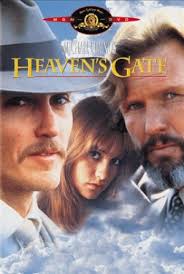
For every production there need to be a time frame, deadlines so that the director and producers can keep track on what happening. Deadlines are an extremely important part of production and is deadlines are not met it could damage the reputations of the director, all trust would be lost and if you then tried coming back you may be overlooked and another director would be found. So it can result in no career. An example of a director who failed to meet his deadlines is Michael Crimono, he directed the film Heavens Gate. The film was way past it's deadlines which ruined Crimonos reputation as a director as it was late for cinema screening. For our production we had a deadline of 12 lessons. First 6 lessons were to complete filming, and the last 6 were to complete any editing. We managed to meet all deadline without struggle and even had time to spare! In the professional industry equipments is a huge factor of time because in larger productions there won't be enough equipment for each person so they have to allocate camera's to certain areas so a schedule for the different types of equipment is necessary. A rate card is very popular, which is when they hire as much equipment as possible so there would be more equipment to share round. In our production we didn't have any problems with equipment, there was more than enough to go round. But if this becomes an issue in the future, we would make a schedule. We used the standard HD camera, tripod, and a shoulder brace. We also had no problems with availability of personnel. Again this could have been an issue if someone had commitments to another production.
Personnel
For our production there were three people, including myself. Two of us were actors in the production, Kieron played the part of the villain, and Kirk played the part of the main character. Neither of them have had much experience in acting. Experience is a key part of a personnel because it can affect the professionalism of a film. But talent and experience will come at a cost as if you want one of the best in your film, then they are going to want a fair bit of money in exchange for their skill/talent. To find out about someone's experience for a professional production you will look at CVs, which will tell you what they have achieved in the past, etc. You will look at their recent work, and possibly interview them. To check for availabilty of the person you are looking at hiring you would check to see i they have any on going contracts. For our production, we didn't use many props or costume due to our low budget. We had to sign a talent release form to be sure we can appear in the production.
Facilities

Different facilities are needed in the production of the film depending on the genre. Our short film is a horror, so we needed to use somewhere dark and confined so we chose a dark corridor. The equipment we used was the standard HD camera, and shoulder brace, and all ambient lighting. (natural occurring light) We needed to use a Mac for post-production for editing our shots together, the software we used for this was Adobe Premier Pro. To create some sound, dialogue we used the microphone on the mac and garageband. In the professional industry, they would have a studio for post-production which is where all the editing and special effects will be done. They may also have a studio for filming, some producers do this over travelling to different locations because it works out much cheaper and it's easy enough to build the set in a studio. Certain financial considerations exist when securing facilities as it obviously costs to hire a studio, and the more advanced, larger studio is going to come with a higher price, so the producer has to have in mind how much they are willing to pay for the facilities they think are suitable, but before the price come into the equation they must check the availabilty of the studio, to be sure it's available in their set schedule dates.
Locations
When looking at deciding our locations we did a location recce, which is a document that contains a record of where you might shoot, these are not committed locations, these are just potentials. Obviously before we agreed on out locations, we had to have legal permissions to film. This is where a location release came in; this is a document which gives legal permission to film in a particular site or location, usually from the land owner. We also informed the local police, to let them know we were going to be filming. Our final locations where, the college and gorleston beach. We needed a large, empty space so we decided on the beach - we shot at a time of day there wouldn't be any people about, because we didn't want to have anything in the background just the sand. In college we used a corridor, because it was the closest we could get to a dark alleyway as my group live so far apart from each other it was not possible for use to all meet in a certain location, so the corridor was the best we could do. When filming on the beach, in a public place we wore t shirts, to let the public know we were filming so that anything that would be seen offensive, they know it's all for the camera.
Materials
Obviously when making a film you are going to need materials. The materials may not always be produced by the film company, these are known as secondary sources/materials. There are various types available to filmmakers, such as the internet, libraries - from the standard book library, to photo or video libraries even archives. Sound library materials, and recorded music. Also the script, props and costume are also important. Because these materials aren't your own, they are property of someone else or another company you are going to need legal permissions to use these. This could be a written permission or contract from the 'owner.' Then you'd need a clearance which just checks all permissions have been obtained but another thing you would have to take into consideration when deciding on materials is the cost; some materials may come with a charge.
Contributors
When creating media product you are going to have various people contribute to the production. Before hiring people you are obviously going to want to know a little about them, so a contributors biography would be useful - this is a document on a particular person which contains information about them. Similar to a CV. Informs you about previous work, and any past experiences on the roll you are looking at hiring them for. This is all very important because before hiring a person because you are going to want to know a bit about them to see if they suit the roll you are looking for. These are from the talent (actors/actresses) to public interaction, experts such as politicians or doctors, also specialist - those who are unique the their job, the best of the best!
Legal Issues

When creating a film there a many different legal issues. You are going to need permissions for a lot of the things you use in the production, from the talent, and locations to images, videos, and music. Clearance is there to make sure you have all permissions, and checks ll permissions have been granted. If you do not get clearance for all aspects of production it will possible be taken to court for money, you would have to pay for your mistake, pay compensations, for the damage. The creator of the original work has the right to be credited - this is copyright, protects the physical expression of ideas. Without copyright you could just take anything and use it, music, ideas, narrative - this is practically stealing someone elses property. In our production we didn't have any problems with copyright most of out material was our own. Another legal issue is public liability insurance, everyone involved is going to need to be insured. Money to pay damage to others, compensation. Working in the production of a film isn't always safe, for example in the production of The Expendables 2, a stuntman was performing a stunt on set and it all went horrifically wrong and one of the men lost their life. The director of this film was Simon West.
 http://www.joblo.com/horror-movies/news/tragedy-strikes-the-shoot-of-the-expendables-2-a-stuntman-dies-and-another-critical-after-stunt-goes-wrong
Another legal issue involved is completion insurance/a completion guarantee which is a contract or agreement that the film maker agrees the film will be finished in the agreed timeframe. Which if a director fails to meet this, their career would be at risk.
Regulation
Ofcom is the communications regulator. They regulate television, radio and advertising. They are there to [protect people for harmful, offensive materials and scams. Ofcom is funded by fees from industry for regulating broadcasting and communications networks, and grant-in-aid from the Government. Ofcom regulate the content of all television and radio programmes in the UK, including programmes on the BBC and all digital channels, as well as Channel 4, Five, and ITV.
PCC - Press complaints commission. A voluntary regulatory body. It has no legal powers, all newspapers and magazines voluntarily contribute to the cost of and rulings of the commission, making the industry self regulating.
ASA - Advertising standards authority. Acting on complaints and proactively checking the media to take action against misleading, harmful or offensive advertisements.
PEGI - Pan-European Game Information. Age rating system to help parents make informed decisions on buying computer games. Supported by major console manufacturers including Sony, Microsoft and nintendo.
BBFC - british board of film classification. This is a non governmental organisation funded by the film industry and responsible for the national classification and censorship of films within the UK. Rates released films, videos and video games. All filmed rated by the bbfc receive a certificate along with 'consumer advice' detailing references to sed, vilolence and coarse language. The certificate specifies that the product is only suitable for someone over a certain age and only those over that age may buy it.
a couple of examples of their categories could be 'U' Universal is suitable for audiences ages 4 years and over. Contains no discriminatory language of behaviour, no references to drugs, scary sequences are mild, no potentially dangerous behaviour children are likely to copy, etc. Where as an 18 for example, is only available for 18 or older to view in cinema, rent or buy an 18 rated film. This would contain explicit material, and really have no limits.
Our depict videos could relate to this, they could be rated for a certain age group. My depict film was a horror, so i would possible rate it as a 12 rating, because the horror is very mild but still wouldn't be suitable for a younger age group.
Trade Unions and Trade Associations
A trade union is an organised group of workers who have joined together to achieve common goals such as better working conditions, wages or a safer working environment. They right for rights, better treatment. Unions have been criticized for increasing cost of workers because of this, it is said that fewer people will be hired. BECTU is the independent trade union for those working in broadcasting film, theatre, entertainment, leisure, interactive media an allied areas. The unions represents staff and contract and for freelance workers who are based in the UK. The key aims of the union are to protect jobs, increase membership, win new recognition agreements and improve pay and conditions of service including pensions. A trade association connects individual businesses and business groups to work together for common goals. Organisation funded by business that operate in a specific industry. TIGA - The independent games developers association, ELSPA - Entertainment and leisure software publishers association and BIMA - British interactive media association are all trade associations. TIGA is a non-profit trade association representing the UK's game industry Their vision is to make the UK the best place in the world to do games business BIMA exists to do three key things which are to support and promote the british digital industry share knowledge and reward great work and encourage the next generation. ELSPA is a trade association which is now closed. Their goal was to establish a specific and collective identity for the interactive leisure software industry across the European community. ELSPA was responsible for introducing the video games ratings to the UK.



.jpg)

.jpg)
.jpg)


.jpg)
.jpg)
.jpg)
.jpg)
.jpg)


.jpg)